Investing journal guides for people who hold for months, not minutes
Most journaling advice is written for day traders. Investors need the same discipline on a slower clock: a written reason for every buy, a level that says you were wrong, a size worked out from a risk budget, and a review that judges decisions rather than prices. These guides show how, each with worked numbers.
Every guide here follows the same idea. Treat each holding as a decision you can grade later. That means writing down what you expected before you buy, measuring the result in R (the result divided by what you planned to risk), and reviewing on a schedule rather than whenever the market makes you nervous.
Start here
Building and managing a position
Reviewing
What the journal does for investors
The RB Trading journal started as a tool for active traders, and that shows in the parts investors find most useful:
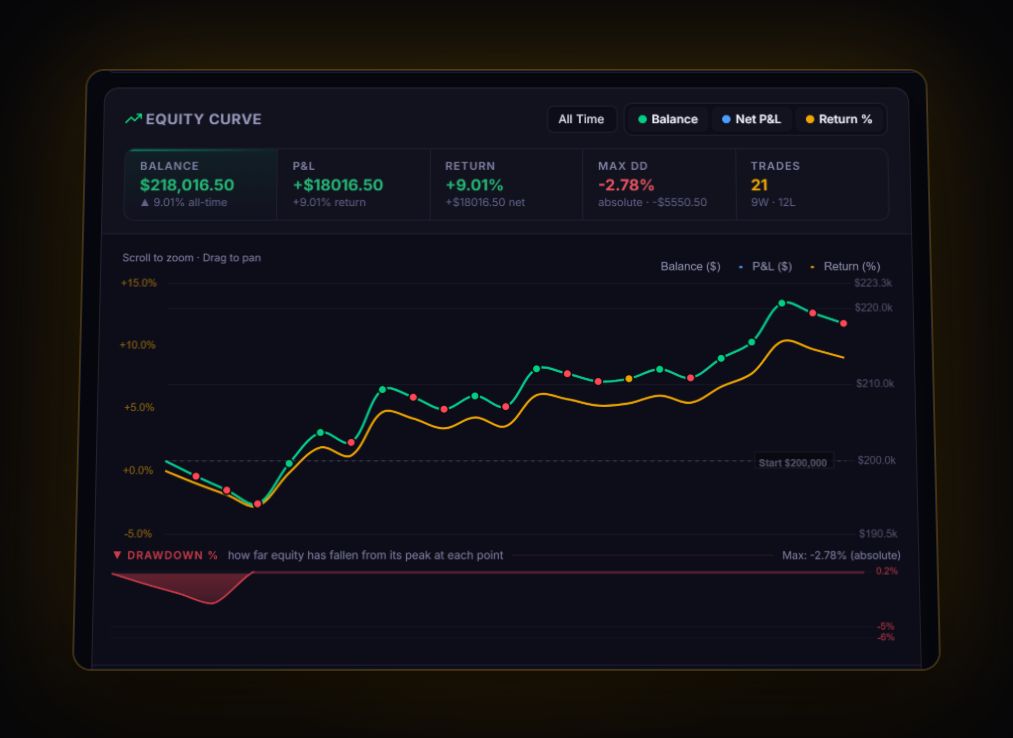
- Several accounts, one login. Keep a long-term portfolio apart from swing trades or a prop challenge, then view them combined.
- Stocks with a cash leverage basis, so buying-power warnings match an ordinary investing account.
- Split entries. Two or three planned entries, each sized from one total risk percentage, saved as one position.
- Partial exits with size-weighted R, so a position sold in thirds gets one honest result.
- Strategy tags, notes and screenshots on every position, plus hold-time analysis once you log close dates.
These guides are education, not personal investment advice. Examples use made-up tickers and round numbers so the arithmetic is easy to follow.
One journal for your long-term account and your trades
Keep a separate account for long-term holdings, see it alone or combined with everything else.
Start free, no card